
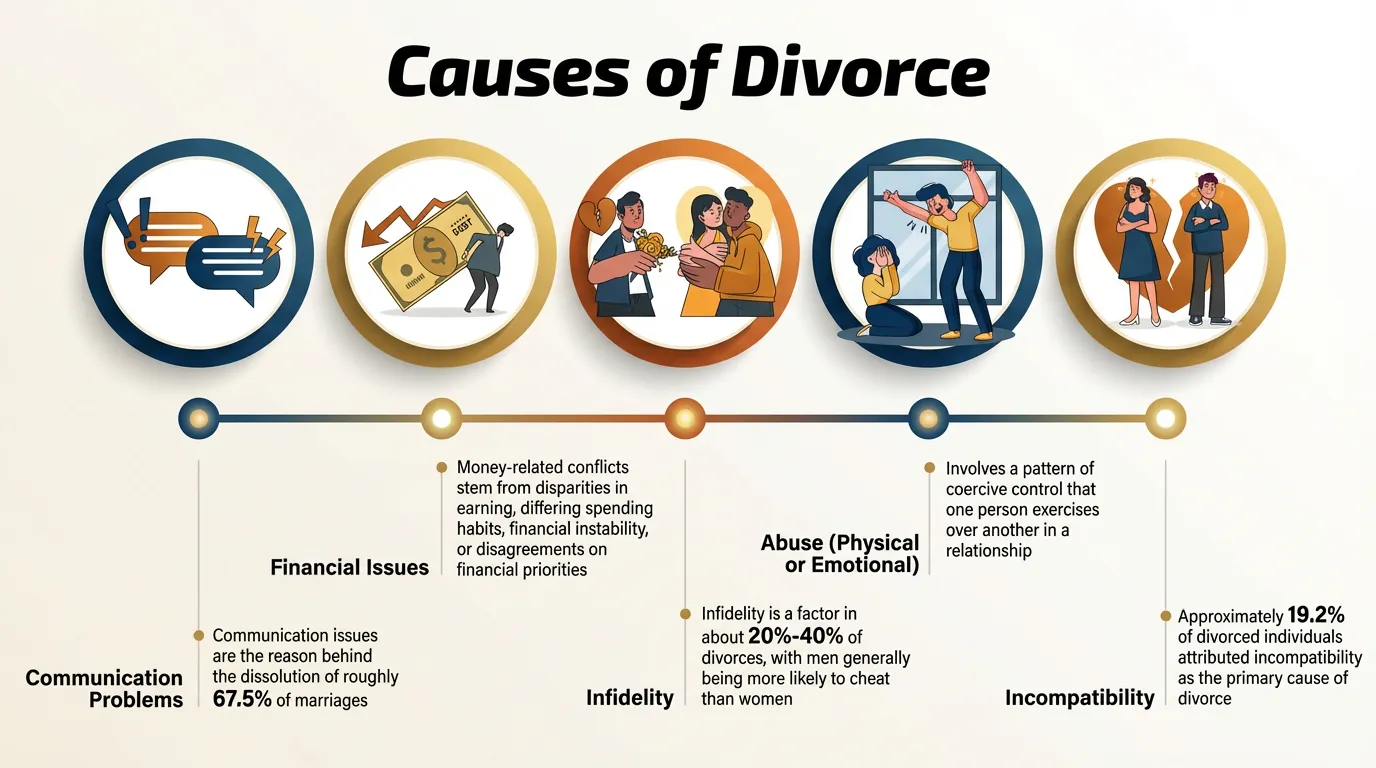
Divorce rarely happens overnight. Instead, couples usually face a series of unresolved conflicts that gradually weaken their relationship. Every marriage experiences challenges; however, the way partners respond to those challenges determines the future of the relationship. When couples ignore problems, avoid communication, or refuse to grow together, they increase the risk of separation. Therefore, understanding the main causes of divorce, helps couples protect and strengthen their marriage. Below are seven key factors that often lead to divorce.
1. Poor Communication
First and foremost, poor communication damages many marriages. Couples may talk every day, yet they often fail to truly listen and understand each other. As a result, misunderstandings grow. Moreover, harsh words, constant criticism, and defensive reactions create emotional distance. When partners stop sharing their thoughts and feelings honestly, they weaken the foundation of trust and intimacy.
2. Financial Problems
Money issues frequently trigger serious conflict. Differences in spending habits, financial priorities, or income levels can create tension. For example, one partner may prefer saving, while the other enjoys spending. Without clear financial planning and teamwork, arguments escalate quickly. Over time, financial stress affects emotional stability and reduces harmony within the household.
3. Infidelity and Broken Trust
Infidelity represents one of the most painful causes of divorce. When one partner breaks the commitment, trust collapses immediately. Even if couples attempt reconciliation, rebuilding trust requires time, transparency, and consistent effort. Many partners struggle to move past betrayal, which leads to resentment and emotional detachment. Without trust, no relationship can thrive.
4. Differences in Values and Life Goals
Every individual brings unique beliefs, values, and life goals into a marriage. At the beginning, differences may feel exciting. However, over time, major disagreements about religion, parenting styles, or career ambitions can create ongoing conflict. If couples refuse to compromise or respect each other’s perspectives, tension continues to grow. Alignment in core values plays a crucial role in long-term stability.
5. Domestic Violence
Domestic violence severely harms relationships. Physical, emotional, or verbal abuse creates fear and insecurity. A healthy marriage requires safety and respect, not control or intimidation. When one partner repeatedly hurts the other, the relationship loses its balance and dignity. In such cases, separation often becomes a necessary step to protect personal well-being.
6. Lack of Commitment
Why marriages fail, demands continuous effort and dedication. When one partner stops investing time and energy into the relationship, imbalance appears. For instance, ignoring responsibilities, avoiding conflict resolution, or prioritizing external interests over the marriage weakens emotional bonds. Over time, disappointment replaces affection. Strong commitment keeps couples connected during difficult moments.
7. Emotional Immaturity
Finally, emotional immaturity contributes significantly to divorce. Some individuals enter marriage without developing conflict-management skills or emotional control. Instead of solving problems constructively, they react impulsively or avoid responsibility. Consequently, small disagreements turn into major arguments. Emotional growth and self-awareness help couples navigate challenges effectively.
Conclusion
In conclusion, divorce stems from multiple interconnected factors. Poor communication in marriage, financial stress, infidelity, value differences, violence, lack of commitment, and emotional immaturity all threaten marital stability. However, couples can prevent many of these issues through open dialogue, mutual respect, and consistent effort. A strong marriage grows through teamwork, understanding, and the willingness to evolve together.

Leave a Reply