
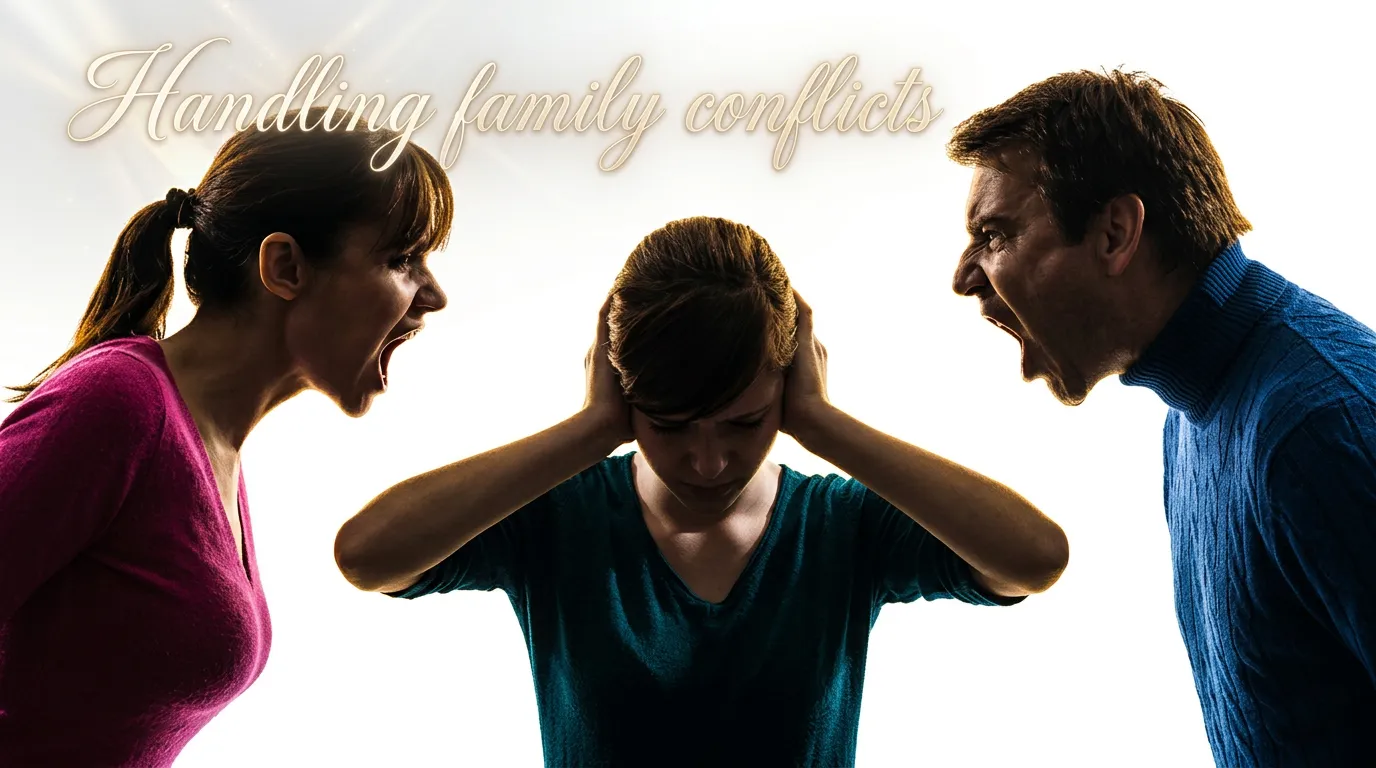
Handling family conflicts, Differences of opinion are normal in any family. Husbands, wives, and children all have unique perspectives and values. However, when disagreements escalate into criticism or conflict, they can harm relationships. Knowing practical solutions to handle critical disagreements helps maintain harmony and strengthens family bonds.
1. Listen Actively and Show Empathy
The first step involves active listening. Conflicts often arise because someone feels unheard. When your spouse expresses criticism, respond calmly instead of defensively. Focus on understanding their viewpoint. For example, say, “I see your point…” or “So you mean this, right?” This approach reduces tension and demonstrates empathy.
Listen to children patiently as well. When children feel heard, they communicate more openly and respectfully. Active listening also strengthens emotional connections within the family.
2. Communicate Clearly and Positively
Miscommunication often worsens disagreements. Avoid words that attack or blame, such as “You always make mistakes” or “You never understand”. Instead, use positive language that addresses the issue, not the person. For instance, replace “You are wrong” with “I have a different perspective; let’s discuss it together.”
Use transition phrases like “Moreover”, “However”, and “On the other hand” to structure conversations. Clear communication ensures everyone feels valued, keeps discussions productive, and reduces misunderstandings.
3. Establish Healthy Discussion Rules
Set ground rules for family discussions. For example, each person speaks without interruptions, and every criticism must come with a suggestion for improvement. These rules prevent arguments from turning into blame games and turn disagreements into opportunities to find compromises.
4. Focus on Solutions, Not Problems
When conflicts arise, direct attention toward solutions instead of dwelling on mistakes or assigning blame. For example, if family members disagree about finances, brainstorm alternatives together instead of criticizing past decisions. A solution-focused approach fosters cooperation and teaches children the importance of teamwork.
5. Allow Time and Space to Cool Down
Not every disagreement requires immediate resolution. Giving each person time to calm down reduces emotional reactions and allows for clearer thinking. After a pause, the family can resume discussions with objectivity and mutual respect.
6. Seek Professional Guidance When Needed
Persistent disagreements may benefit from professional support, such as family counseling. Experts provide strategies for effective communication and conflict management tailored to your family’s dynamics. Positive family communication.
Conclusion
Critical differences of opinion among husbands, wives, and children naturally occur in family life. The key lies in active listening, clear communication, healthy discussion rules, and solution-oriented approaches. By handling disagreements constructively, families can transform conflicts into opportunities for growth, understanding, and closer relationships. Families that practice empathy and open communication create a safe environment where every member feels respected an

Leave a Reply